Chinese astrology has more layers than the 12 animal signs most people know. One of the most useful advanced tools is the Ten Gods, a symbolic system used in BaZi, or Four Pillars of Destiny, to describe how the five elements interact in a chart. Despite the name, the Ten Gods are not deities. They are relationship labels that help explain personality patterns, talents, habits, and the way a person responds to pressure, opportunity, and change.
If you have ever wondered why two people with the same Chinese zodiac animal can seem completely different, the Ten Gods are part of the answer. They add detail to a chart by showing whether an element supports, challenges, controls, or mirrors the day master, which is the core element representing the person in BaZi.
What the Ten Gods Actually Are
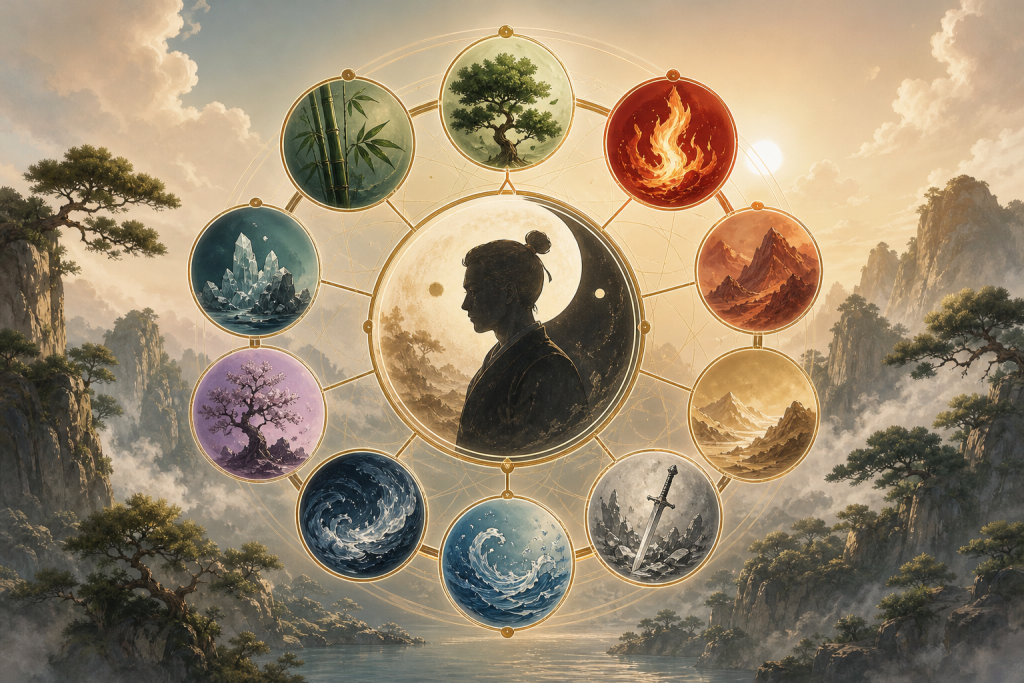
The Ten Gods are built from the interaction of five elements: Wood, Fire, Earth, Metal, and Water. In a BaZi chart, every other stem or branch can be compared to the day master element. That relationship creates one of ten symbolic roles. These roles are grouped by whether the other element is the same as, generates, drains, controls, or is controlled by the day master.
Even though the system sounds mystical, it is really a structured language for describing balance and tension. A chart with more of one relationship type may suggest a person naturally leans toward certain behaviors, but it does not lock anyone into a fixed destiny. Context matters, and the full chart always matters more than any single label.
The Ten Gods at a Glance
Here is a simple way to understand the categories:
- Direct Resource and Indirect Resource: support, learning, reflection, and nourishment
- Friend and Rob Wealth: peers, self-assertion, competition, and shared energy
- Eating God and Hurting Officer: expression, creativity, communication, and output
- Direct Wealth and Indirect Wealth: practical gain, management, opportunity, and initiative
- Direct Officer and Seven Killings: structure, rules, pressure, responsibility, and challenge
These names can sound dramatic, but they are shorthand. For example, “Wealth” does not only mean money. It can also point to resources, results, or the ability to manage what matters. “Officer” does not only mean authority figures; it can also describe discipline, accountability, or the need to follow standards.
Why the Ten Gods Matter in Reading a Chart
The Ten Gods help astrologers interpret how energy behaves in a chart. A person with stronger Resource influence may prefer study, preparation, or guidance from trusted sources. Someone with prominent Output may be more expressive, inventive, or verbally direct. A chart with strong Officer energy may show a person who respects structure, obligations, or clear expectations.
This does not mean one type is better than another. The value of the system is in balance. A chart with too much of one relationship can feel lopsided, while a chart with a more even spread may show greater flexibility. In practice, the Ten Gods help explain why someone may thrive in one environment and struggle in another.
How the Ten Gods Connect to the Day Master
The day master is the center point of BaZi interpretation. Once that element is identified, every other element is measured against it. The same element as the day master becomes one kind of peer energy. The element that produces the day master becomes a resource. The element the day master produces becomes output. The element that controls the day master becomes authority or pressure. The element the day master controls becomes wealth.
This structure is what gives the Ten Gods their logic. For example, if a person’s day master is Wood, then Water can act as Resource because Water nourishes Wood. Fire can become Output because Wood feeds Fire. Earth can become Wealth because Wood controls Earth. Metal can become Officer because Metal cuts Wood. Wood itself becomes Peer energy because it is the same nature.
Common Misunderstandings About the Ten Gods
One common mistake is reading the names too literally. A “Seven Killings” placement does not mean danger in a dramatic sense. It often points to intensity, swift decisions, competition, or the need to handle pressure. Likewise, “Rob Wealth” does not automatically mean loss. It may describe teamwork, rivalry, independence, or a strong desire to claim one’s own path.
Another mistake is focusing on just one Ten God and ignoring the rest of the chart. In BaZi, meaning comes from pattern, not from a single symbol. A chart may have a strong Officer theme, but if Resource or Output also appears prominently, the interpretation changes. Good reading depends on context, season, strength, and placement.
The Ten Gods are best understood as relationship patterns, not fixed labels. They describe how a chart’s energy moves, not a person’s entire identity.
Using the Ten Gods in Everyday Life
Even without doing a full BaZi reading, the Ten Gods can offer a practical lens for self-observation. If you notice that planning, research, and quiet time help you feel grounded, Resource energy may be important in your life. If you feel most alive when creating, speaking, writing, or building something tangible, Output may be a strong theme. If structure helps you stay on track, Officer energy may be supportive.
Because Chinese astrology is symbolic, the Ten Gods can also be used for reflection during major life choices. For example, someone considering a new role might ask whether the environment rewards creativity, teamwork, discipline, or adaptability. That question is more useful than asking for a simple yes or no prediction.
How to Start Learning the Ten Gods
The easiest way to begin is by learning the five elements first, then identifying your day master. From there, you can map how each other element relates to it. Many beginners find it helpful to study one relationship at a time instead of memorizing all ten at once.
- Learn the five elements and their generating and controlling cycles.
- Find the day master in a BaZi chart.
- Compare each other element to the day master.
- Group the relationships into Resource, Peer, Output, Wealth, and Officer categories.
- Look for repeated patterns instead of isolated symbols.
With practice, the Ten Gods become a useful vocabulary for reading Chinese astrology more clearly and accurately.
Conclusion
The Ten Gods are one of the most insightful parts of Chinese astrology because they turn elemental theory into a practical system for understanding personality and life patterns. They do not predict a fixed future, and they do not define a person in a single phrase. Instead, they show how energy interacts within a chart and where a person may naturally seek support, expression, stability, or challenge. For anyone learning BaZi, the Ten Gods are a strong next step beyond the basic zodiac animals.