
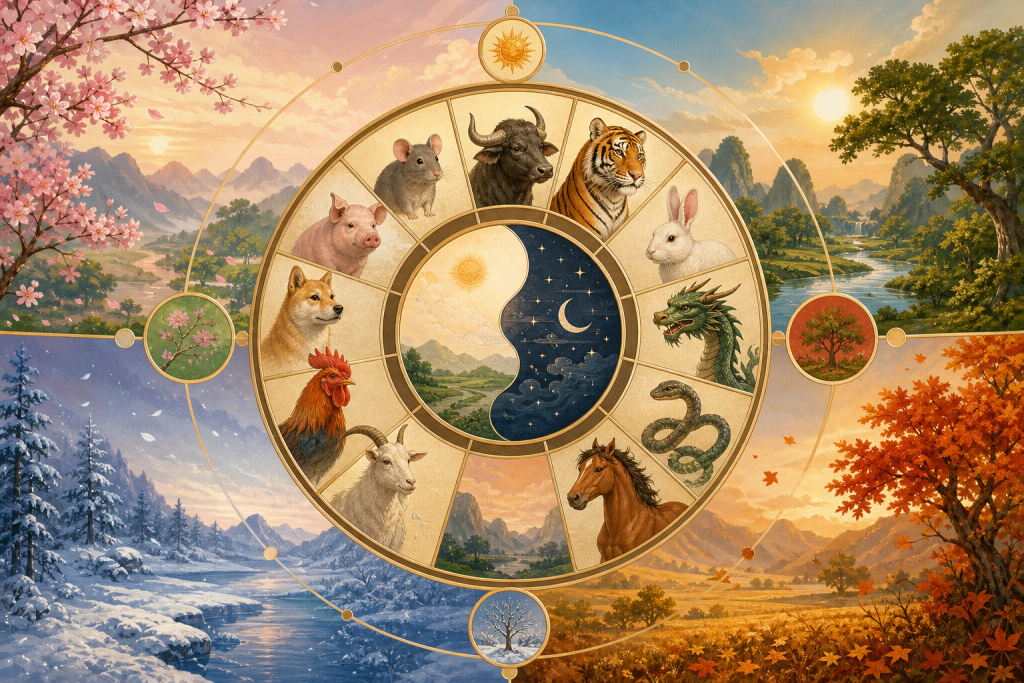
Chinese astrology is often introduced through animal signs and birth years, but the system goes deeper than a yearly label. One of the most useful layers is the month branch, a timing cycle that adds nuance to personality analysis, seasonal symbolism, and chart interpretation. If you have ever wondered why two people born in the same zodiac year can still seem very different, the month branch is one reason.
In traditional Chinese astrology, the year, month, day, and hour each contribute to a fuller reading. The month branch is especially important because it connects a person to the season of birth and to the rhythms of nature. Rather than predicting events, it helps describe tendencies, strengths, and the kind of energy that may feel natural or challenging.
What Is a Chinese Astrology Month Branch?
The Chinese zodiac uses twelve earthly branches, the same twelve animal signs associated with the years. These branches also map onto months. In this system, each lunar month carries a branch that represents a distinct seasonal energy. For example, the month branch of Tiger is linked with early spring, while the month branch of Horse aligns with the height of summer.
Unlike Western astrology, where the Sun sign is tied to a monthly zodiac period, Chinese astrology does not use the month branch as a standalone identity label. Instead, it functions as one part of a larger natal chart. That makes it a valuable layer for interpretation, especially when comparing the year branch with the month branch.
Why the Month Branch Matters in a Birth Chart
The year branch is often the first thing people learn, but the month branch can be just as revealing. It is commonly associated with family environment, formative experiences, work style, and the way a person approaches responsibility. In traditional readings, the month branch can also reflect the outer personality that others notice in everyday life.
This does not mean the month branch determines fate. It simply adds context. A person born in a Rat year with a Dragon month may express energy differently from someone born in a Rat year with a Goat month. The year gives a broad theme, while the month adds seasonal texture.
Think of the year branch as the backdrop and the month branch as the weather of birth: both shape the scene, but in different ways.
The 12 Month Branches and Their Seasonal Meaning
Each month branch corresponds to a point in the annual cycle. Traditional systems often connect these branches with seasonal flow rather than fixed calendar months in the modern sense. The emphasis is on the natural movement of energy through the year.
- Tiger — beginnings, rising energy, early spring
- Rabbit — growth, flexibility, gentle expansion
- Dragon — momentum, visibility, strong upward force
- Snake — refinement, focus, inward intelligence
- Horse — activity, warmth, outward movement
- Goat — creativity, sensitivity, balance
- Monkey — adaptability, cleverness, experimentation
- Rooster — precision, order, direct expression
- Dog — loyalty, structure, discernment
- Pig — abundance, ease, generosity
- Rat — resourcefulness, planning, quick response
- Ox — steadiness, endurance, grounded effort
These meanings are broad, and different schools may describe them with slightly different emphasis. The main idea is that each month branch carries a type of seasonal quality that can shape interpretation.
How the Month Branch Is Used in Astrology Readings
In a Chinese astrology chart, the month branch may be used to explore how a person functions in practical life. Readers often look at the relationship between the month branch and the year branch to understand whether the chart feels harmonious, intense, balanced, or internally divided.
For example, someone with a year branch that is energetic and outward-facing may have a month branch that is more cautious or reflective. That combination can suggest a person who appears confident in public but prefers careful planning behind the scenes. Another chart may show the reverse: a reserved year branch paired with a lively month branch, suggesting a person who becomes more expressive in work or family settings than strangers might expect.
The month branch is also useful for seeing how a person responds to seasonal shifts, routines, and obligations. It can suggest whether someone prefers structure, variety, solitude, collaboration, or visible progress.
Month Branch vs. Month Pillar: A Helpful Distinction
In Chinese metaphysics, the month branch is one part of the larger month pillar. The pillar includes both a branch and a heavenly stem. The branch provides the seasonal base, while the stem adds another layer of elemental expression. For readers who are new to the topic, it helps to start with the branch because it is easier to understand and often discussed first.
The branch is not the full story, but it is a strong foundation. If the branch shows the season, the stem shows how that season manifests. Together, they create more detail than either layer alone.
How to Find Your Month Branch
Finding the month branch is not always as simple as matching your Western birth month to a zodiac animal. Chinese astrology traditionally follows the lunar calendar and seasonal boundaries, so exact dates matter. In many chart systems, the month changes around the solar terms rather than on the first day of a Gregorian month.
That means a birth near the start of a month may fall into a different branch than expected. For accurate chart work, it is best to use a reliable Chinese astrology chart calculator or a traditional birth chart calculation method that accounts for the exact date and time of birth.
If you are studying your own chart, remember that the month branch is only one piece of a larger pattern. It becomes most useful when read alongside the year, day, and hour branches.
Why This Layer Matters for Beginners
Many beginners stop at the twelve animal years, but that view can make Chinese astrology seem overly general. The month branch shows why the system is more detailed than a simple zodiac label. It explains how timing, season, and inner rhythm can add complexity to a person’s profile.
For anyone learning Chinese astrology, the month branch is a practical next step because it is easier to grasp than the full four-pillar structure, yet rich enough to deepen interpretation. It helps bridge the gap between broad zodiac identity and a more personalized reading.
Conclusion
The Chinese astrology month branch is a subtle but important part of the tradition. It adds seasonal context, helps explain differences between people born in the same zodiac year, and offers insight into temperament and life rhythm. Rather than standing alone, it works best as part of the larger chart, where it contributes nuance and balance.
If you are exploring Chinese astrology beyond the basics, the month branch is a meaningful place to look next. It turns a simple animal-year system into a more layered and insightful framework.